Moving an electric vehicle is not quite the same as moving a petrol or diesel car. Charge level, range planning and where the car can top up all come into play. We have been delivering EVs since 2017, so here is how it works in practice and what to think about when you need one moved.
Driven or transported: the EV question
As with any vehicle, an EV can either be driven to its destination or transported on a transporter. With electric cars, the choice has a few extra considerations.
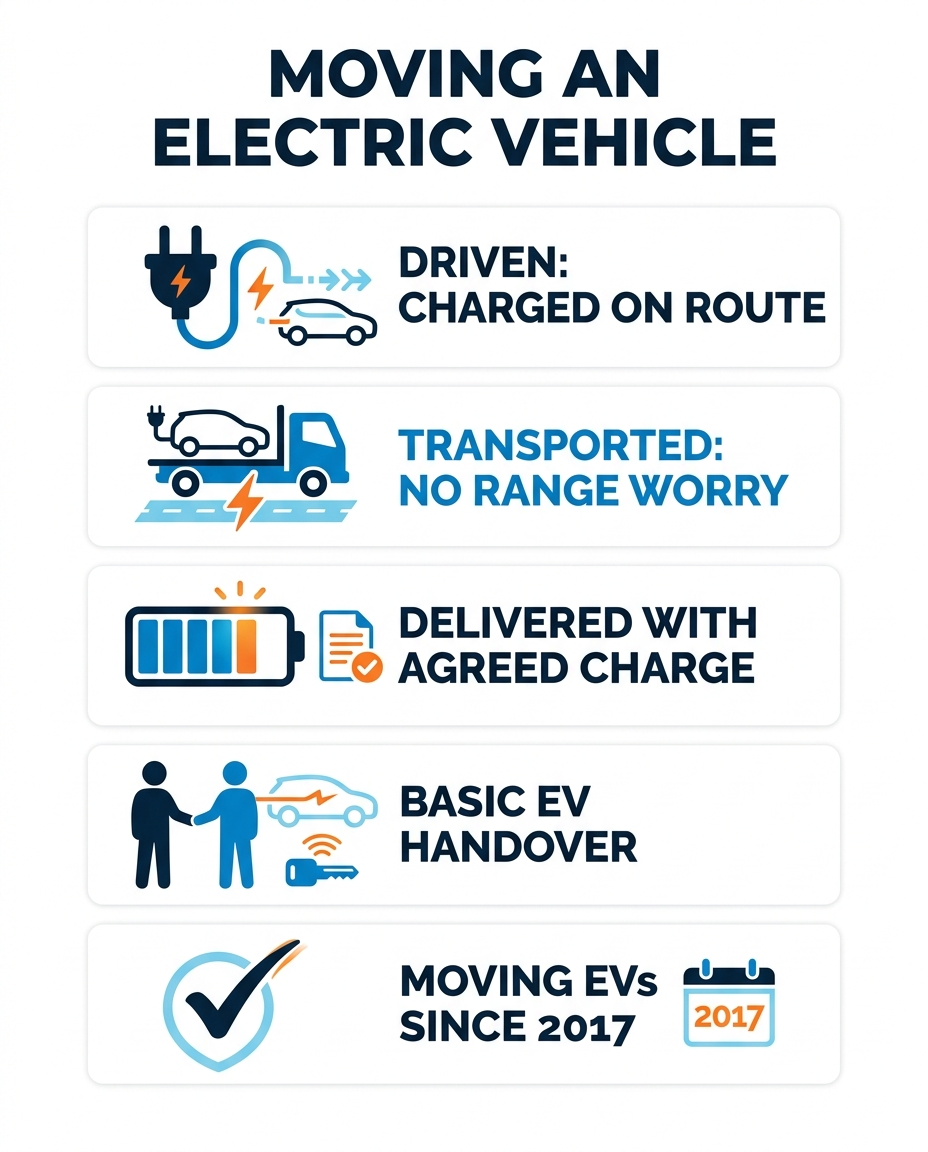
Driven, with charging on route
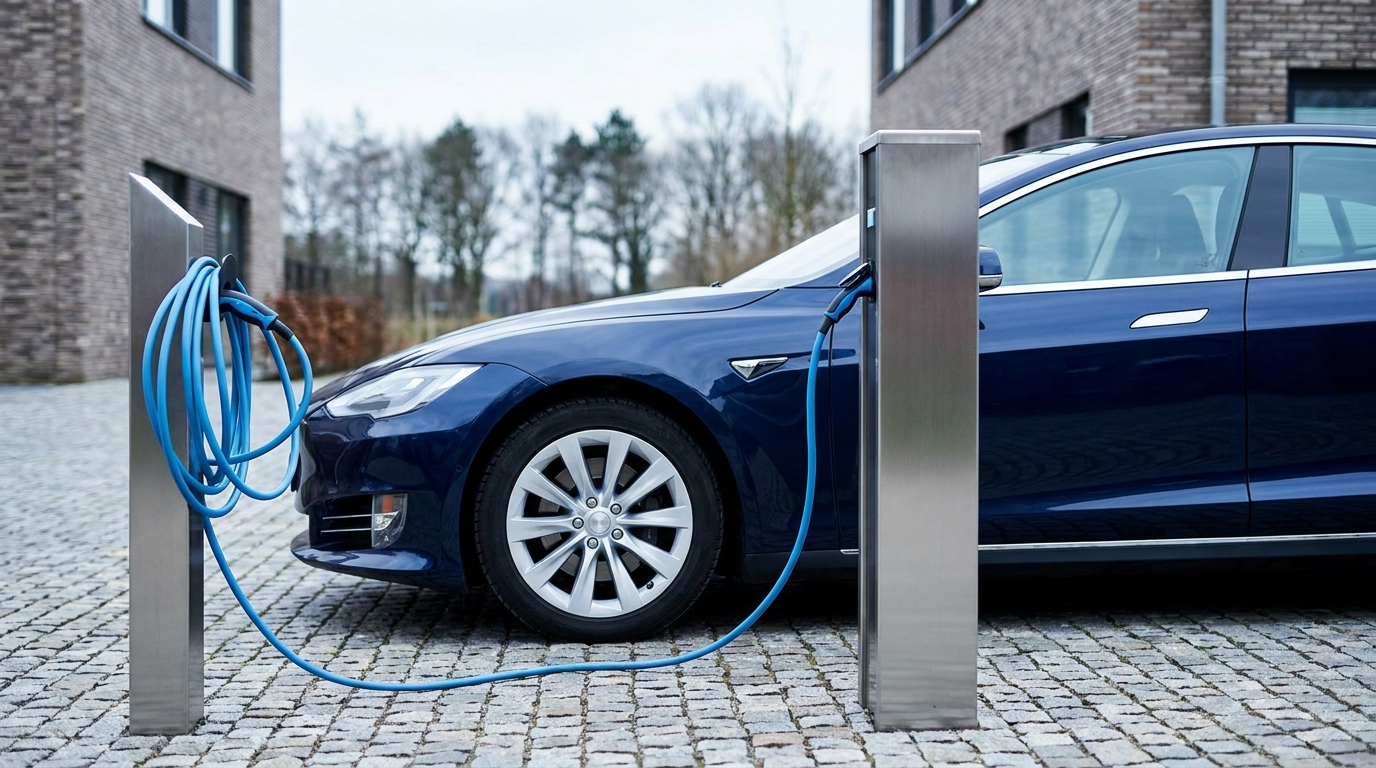
A trade-plate driver can collect and drive the car, just as with any other vehicle. To be driven, the EV must be roadworthy with a current MOT. The difference is range planning. For longer journeys, the driver factors in:
- The car’s realistic range on the day.
- Where to charge on route, using the public network.
- The time charging stops add to the journey.
This works well and keeps the car moving under its own power. It does mean the journey is planned around charging, and the electricity used on the way is part of the job.
Transported, with no range worries
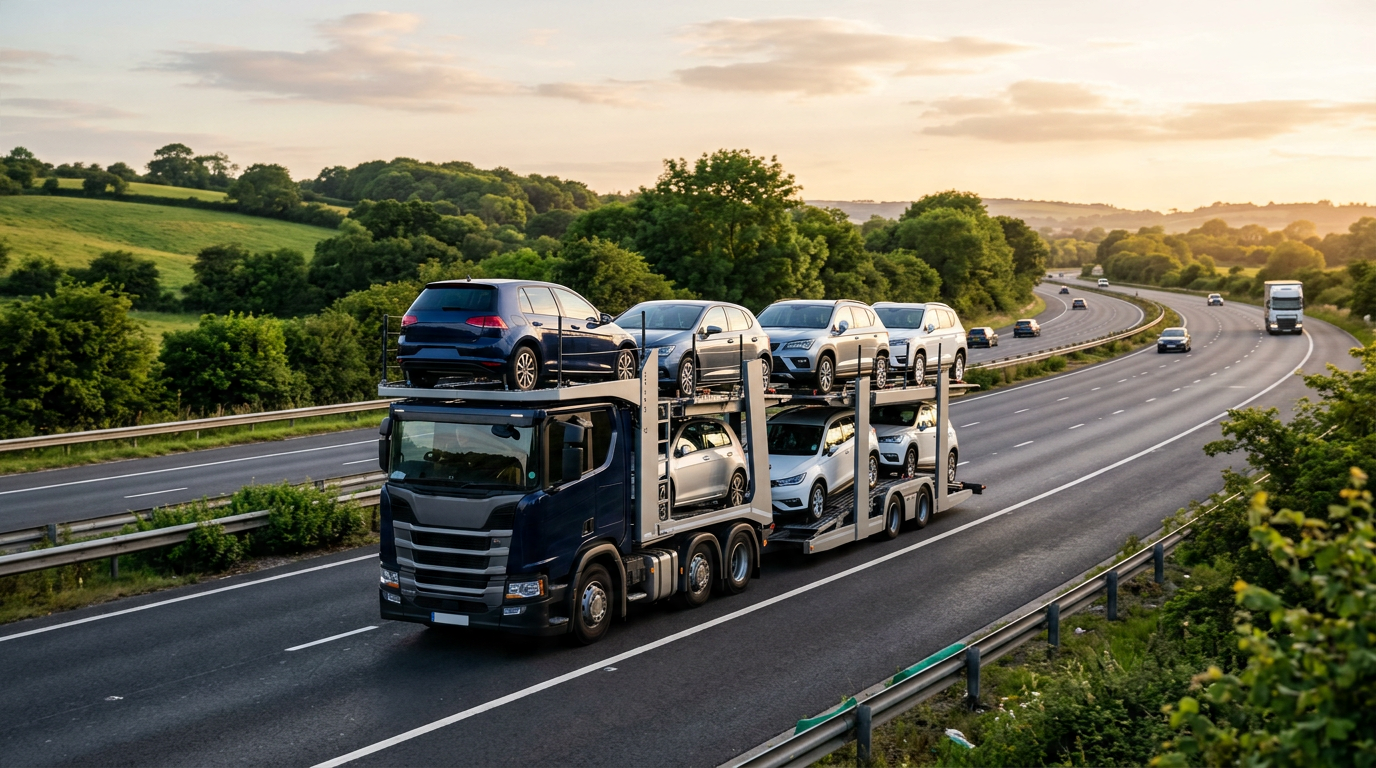
The alternative is to move the EV on a transporter. This removes the range question entirely. There is:
- No need to plan charging stops.
- No charging cost to account for on the journey.
- No extra mileage added to the car.
For newer, higher-value or long-distance EV moves, transport is often the simpler and tidier option. The car arrives having travelled the whole way on the transporter rather than the road.
Delivering with an agreed percentage of charge
One thing that matters to EV owners and dealers alike is how much charge the car has when it arrives. Nobody wants a car delivered flat, and a brand-new car often needs to arrive ready to drive away.
We agree a target percentage of charge for delivery in advance. Whether the car is driven or transported, we aim to hand it over at the level you have asked for, so it is ready to use straight away. This is particularly useful for:
- Dealers who need stock retail-ready on arrival.
- Private buyers who want to drive the car the moment it lands.
- Fleet operators handing a car straight to a driver.
A simple handover for the driver
EVs are straightforward to hand over, but a few details help things go smoothly. When we collect, it helps to have:
- Both keys or key cards where relevant.
- Any charging cables that travel with the car.
- The charge level and any charging notes for the vehicle.
At delivery you get the same protection as on every movement: a digital photo condition report at both collection and delivery, instant proof of delivery, and full insurance throughout. That photo record at both ends means the car’s condition is documented before and after the journey, with no ambiguity.
Experience that matters
EVs have their own quirks, from charging connectors to how they behave on a transporter, and experience counts. We have moved electric vehicles since 2017, including cars like a Skoda Enyaq, and we keep up to date as the technology moves on. You can read more about how we handle them on our electric vehicles page.
Being based in central Leicestershire on the motorway network means we are well placed to plan EV journeys across the UK, whether that is a single car or a run of fleet vehicles.
Getting a price
The cost of moving an EV depends on the same things as any vehicle: distance, whether it is driven or transported, the charge level you need on arrival, and timing. We do not quote blind. Tell us the journey and the car, and we will give you a fixed price.
If you have an electric vehicle that needs moving, driven or transported and delivered with the charge you need, get a fixed-price quote and we will plan the journey around it.