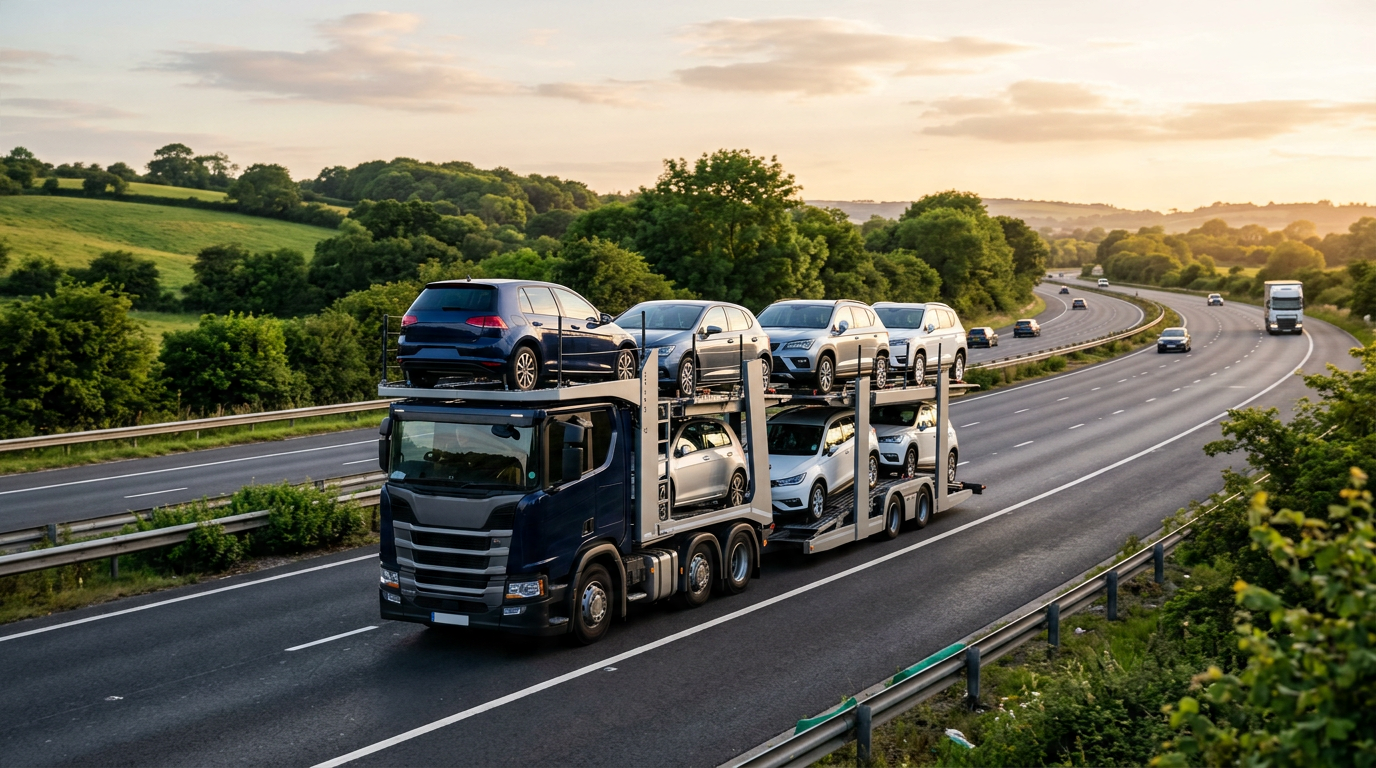

For a car dealer, stock that is in the wrong place is stock you cannot sell. Moving vehicles between sites, collecting from auction and transferring cars to other dealers quickly and without damage is a core part of running a profitable forecourt. Here is how dealer stock movement works and where it can be made smoother.
The everyday moves
Most dealer movements fall into a few familiar categories, and each has its own rhythm.
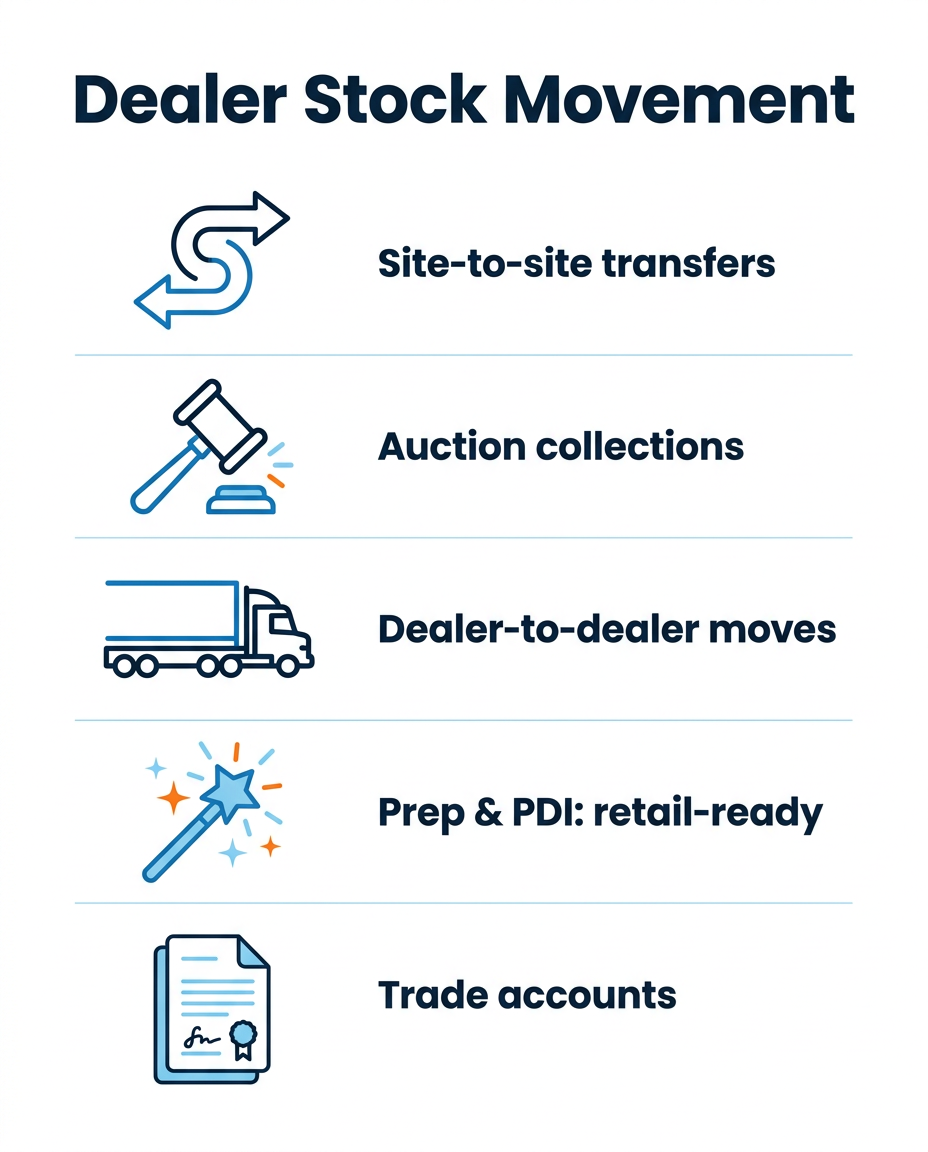
- Site-to-site transfers. Balancing stock across branches so the right cars are in front of the right buyers. These are often regular, planned runs.
- Auction collections. Getting a car you have just won back to your forecourt promptly, before it ties up money sitting in someone else’s compound.
- Dealer-to-dealer transfers. Buying or selling stock between traders, where speed and a clean handover keep relationships healthy.
For each of these, the question is the same: should the car be driven or transported?
Driven or transported for trade stock
A trade-plate driver is often the most cost-effective way to move roadworthy stock. To be driven, a car must be roadworthy with a current MOT, and on driven jobs the tax is covered, so there is nothing for you to sort out.
Where a car is not roadworthy, has no current MOT, is brand new, or you simply do not want miles added, it goes on a transporter instead. Many dealers use a mix: trade-plate drivers for ordinary runners, transport for new or higher-value units.
Getting cars retail-ready
Moving the car is only half the job. To sell, it needs to look the part. Rather than handle prep in-house or across several suppliers, you can have it done as part of the journey.
Our prep centre and PDI can get cars retail-ready before they reach your forecourt, including pre-delivery inspection and valet, so a car arrives ready to go straight onto the pitch. We added a dedicated PDI centre in 2025, alongside new offices and a bodyshop, which means more of the work can happen under one roof.
We can also help with the surrounding logistics through our secure Leicestershire compound, including storage between movements and SMART repairs to tidy up minor cosmetic issues before sale.
Condition reports avoid disputes
When stock changes hands, between sites, between dealers, or from auction, the most common cause of friction is disagreement over a mark or a dent. Who caused it, and when?
Every movement we carry out includes a digital photo condition report at both collection and delivery, plus instant proof of delivery. For a dealer that means:
- A clear photographic record of how every car looked at each stage.
- Far less room for argument over transit damage.
- Evidence to hand if a query ever arises with a buyer, an auction or another trader.
Every movement is also fully insured, so the stock is protected from the moment it is collected.
Trade accounts and central location
Dealers who move stock regularly benefit from a trade account and a single point of contact, so movements can be booked quickly and billing is straightforward. You can see how we work with the trade on our dealers page.
Being based at Stapleton in Leicestershire, central in the UK and on the motorway network, means we can reach forecourts, auctions and other dealers across the country efficiently. We have been doing exactly this since 1990 and are members of the BVRLA.
Getting a price
The cost of moving stock depends on distance, the number of vehicles, whether they are driven or transported, and any prep you need on the way. We will give you a fixed price for the work rather than leave you guessing.
If you want stock moved cleanly, documented at both ends and arriving retail-ready, get a fixed-price quote or ask us about a trade account.